We cannot settle for the status quo.
ETA educates about:
Fast, frequent, reliable, state of the art transit
Cost-effectiveness of capital and operations
Universal accessibility
Travel time reduction
Best practices for high-quality electric rail
A phased plan for through-running service at Penn Station using Metro-North's Penn Station Access as a launching pad. Prepared in 2025.
Reasonably-priced monthly passes are an international best practice for a reason: they are one of the strongest ways to encourage transit ridership, reduce fare evasion, and make proof-of-payment fare collection far easier.
ETA joins other New York area civic organizations to implore the legislature not to mandate two-person train operation.
One-person—and increasingly, fully automated—train operation is the standard around the country and the world. It is safe, and it allows more service at a lower cost.
The Daily News discusses the push by ETA and other New York-area civic groups to stop a bill mandating two-person subway crews—something not mandated anywhere else in the world.
One-person train operation is the standard across both the country and the world. It is safe, it lowers costs, and allows for more frequent service at a lower price.
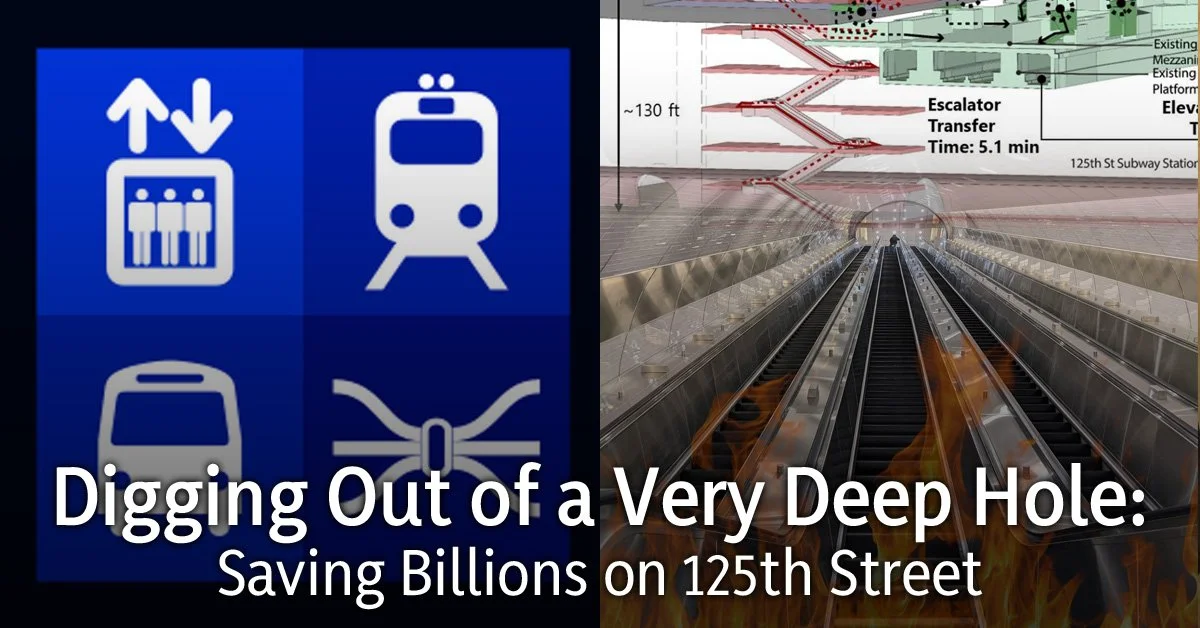
A 125th St extension of the Second Ave subway travels the right route, but with a price of more than $7B/mi and with deep stations forcing 5+ min escalator trips, the current plan doesn't work.
ETA sat down with the Joint Transit Association to talk ways to fix this vital link.
Streetsblog spoke to ETA about monthly caps. While better, ETA still recommends steeply-discounted prepaid monthlies.
Before OMNY, a NY monthly pass cost 46 rides. In contrast, the Continental European range is 15-30, encouraging ridership while discouraging fare evasion.